
Reviewed · HISTORICAL TOURS
Doha: North of Qatar Tour, History and heritage
Qatar’s northern coast tells an older, quieter story than Doha’s glass towers. This 4-hour trip takes you from Al Khor’s pearling harbor to mangrove country, the UNESCO-listed ruins of Al Zubara, and a remarkable desert artwork arranged around a fivefold pattern.
I like the small maximum group of six, which gives you room to ask questions and adjust the pace. I also like the practical touches: private transport, bottled water, tea, coffee, and guides such as Tariq and Usman, who are often praised for clear explanations and thoughtful photo stops.
The main drawback is distance and heat. You spend a fair amount of time on the road, and the schedule is fairly full. The entrance fee for Al Zubara Fort is not included, and the exact quality of the experience can depend on which guide is assigned.
Key points at a glance
- Al Khor’s old pearling center: See the harbor and traditional fishing dhows in a town older than Doha.
- Purple Island’s mangroves: Walk among quiet coastal vegetation and, if conditions suit, consider the area’s kayaking possibilities.
- Al Zubara Fort and vanished town: Visit Qatar’s first UNESCO World Heritage site and learn how a once-prosperous port faded into the sand.
- A tiny group of up to six: Private transportation makes this more personal than a large coach outing.
- Desert geometry near Al Shamal: See circular shelters and rings positioned according to a fivefold symmetrical design.
- Good guide service matters: Tariq, Usman, Wadood, Zia, and Adil have all been praised for history, flexibility, water service, and photography, though one account found the commentary too limited.
Why northern Qatar is worth your half-day
Doha is the obvious center for a first visit, but it can give you a narrow view of Qatar. The north offers a different rhythm: old fishing towns, low coastal vegetation, archaeological remains, abandoned buildings, and broad stretches of desert.
I like this tour because it connects those places instead of treating them as isolated photo stops. Al Khor explains the country’s sea-based economy. Purple Island shows the coastal environment. Al Zubara brings the trading past into focus, while the final artwork adds a modern and slightly unexpected note.
At $59 per person, the value depends on your group size and how much you would otherwise spend arranging transport. For a party of two to six, private transportation and hotel pickup can make the price sensible, especially since the route reaches well beyond central Doha. The fort admission and all fees and taxes are not included, so allow a little extra for that cost.
The tour is listed at about four hours, though timing may vary. One person described a particularly extended outing of six hours, while another found the guide followed the plan closely. You should treat four hours as the expected length, not a promise that every stop will receive the same amount of time.
A few more Doha trips to weigh up
- Full Day Qatar’s North And West tour || History & Heritage
★ 5.0 · 229 reviews - Desert Safari + History to Modern City Tour
★ 5.0 · 174 reviews - From Doha: Culture & History Qatar Tour to the North & West
★ 5.0 · 51 reviews
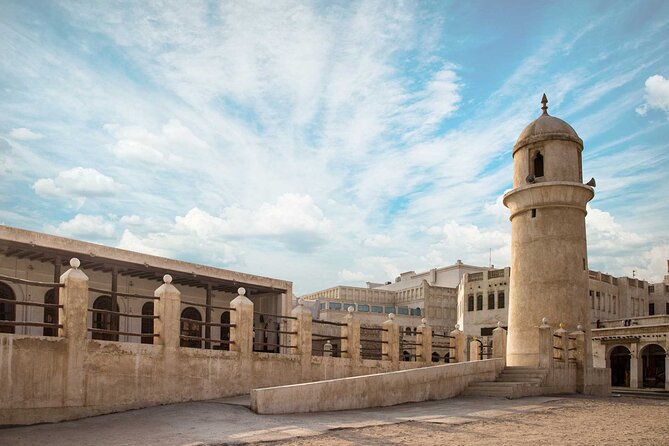
Al Khor, Qatar’s old sea town
Al Khor, also spelled Al Khawr, means sea on three sides in Arabic. It lies about 50 kilometers north of Doha and is older than the capital, though much smaller today.
The town once served as a center of Qatar’s pearling industry. That trade lost its importance after cultured pearls changed the market, but the harbor still gives you a useful picture of the older coastal economy. Traditional fishing dhows sit along the waterfront, and the corniche leads toward mangrove colonies.
You have about 45 minutes here, with no admission charge listed. That is enough for a walk, harbor photographs, and a look at the setting. A museum in Al Khor covers fishing, pearling, and dhow building, but the tour details do not confirm that you will enter it, so ask your guide if the museum is part of your stop.
This is not a grand monument visit. Its value lies in context. After seeing Doha’s modern skyline, it helps to picture a time when Qatar’s fortunes depended on boats, oysters, fishing, and skilled coastal workers.
A good guide can make a large difference here. Tariq has been praised for explaining each place before arrival and helping with photos. Guides such as Usman and Wadood have also been noted for adding historical and cultural detail rather than simply pointing out the harbor.
Purple Island and the Al Thakira mangroves
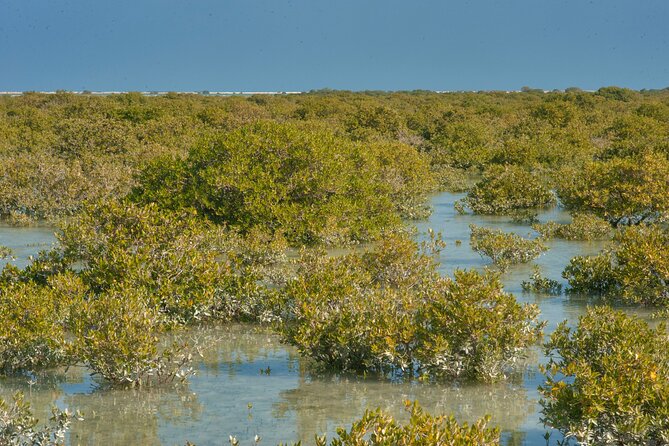
Purple Island, also called Al Khor Island, is a quiet natural stop beyond Al Khor. Its mangroves and greenery offer a sharp change from the city and from the dry desert stretches along the road.
The name may suggest a colorful attraction, but the appeal is more restrained. You come for open space, coastal plants, walking, and the chance to see a less built-up side of Qatar. The area is described as suitable for long walks, family picnics, and kayaking, although kayaking is not listed as an included activity.
You have around 45 minutes. That is enough for a short walk and photographs, but not for a long nature outing. If you want time for kayaking or a more relaxed visit, confirm the plan before setting off. The listed admission is free.
The mangroves are one of the strongest parts of the trip for anyone who wants a break from buildings and museums. One account described the walk along a boardwalk as peaceful and full of life. Another highlighted the mangroves as a welcome part of seeing Qatar’s north.
This stop also brings a practical issue into view: the heat. Water is included, and several guides have made a point of offering cold water or tea. Still, you should use the available shade, carry sun protection, and wear shoes suited to a short walk. The information provided does not promise extensive walking facilities, so do not plan this as a full hiking excursion.
Al Zubara Fort and the town lost to the sand
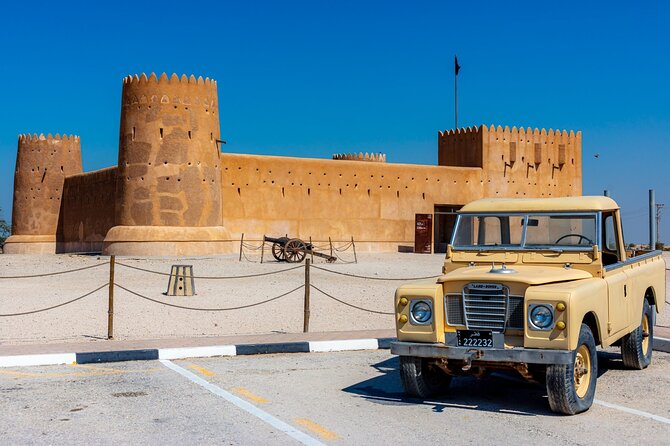
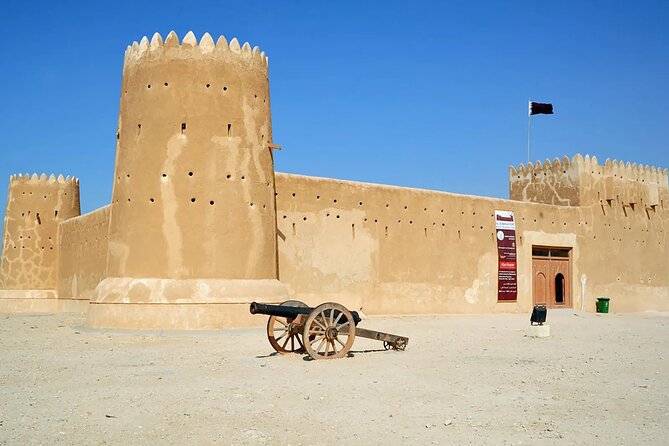
Al Zubara is the historical centerpiece of the route. The fort sits in northwestern Qatar beside the ruins of an older fort, within the remains of a once-flourishing port.
The settlement grew through trade, fishing, and pearling. Its position gave it an important role in the region, but the town later declined. Today, the archaeological area gives you a rare chance to see the physical remains of a former Qatari trading center rather than only hearing about it in a museum.
Al Zubara Fort is Qatar’s first UNESCO World Heritage site. The protected area is still being studied, with archaeologists and antiquities specialists continuing work under the Qatar Museums Authority. Objects found during excavation are displayed in the restored fort.
You get about an hour here, the longest scheduled stop. That is appropriate. The site needs explanation, since ruined walls alone do not tell you how the port functioned or why it disappeared. Guides who explain the town before you arrive can turn the visit from a quick fort photograph into a useful lesson in Qatar’s coastal past.
Admission is not included. The supplied details do not give the exact ticket price, so check the current cost when booking or before departure. All fees and taxes are also listed separately from the tour price.
You should also keep expectations realistic. This is an archaeological site, not a fully reconstructed old town. Some of what you see may be ruins, foundations, and open ground. The attraction is the evidence of what was there, along with the restored fort and displays, not a row of preserved shops ready for browsing.
For me, that makes Al Zubara more valuable than a polished heritage attraction. It shows how quickly a port can lose its role and how much of Qatar’s earlier economy was tied to the sea.
Same desert and coast, a completely different kind of day:
- Doha: Safari, ATV, Camels, Sandboarding and Inland Sea Tour
★ 4.8 · 5,291 reviews - Doha: ATV, Quad/Buggy Dune Bashing, Camel Ride, Sandboarding
★ 5.0 · 3,784 reviews - Desert safari, Dune bashing, sandboarding, camel, ATV Option
★ 5.0 · 2,826 reviews - Qatar Gold Dune Safari, Dune Bashing,Camel Ride,Sand Boarding,Inland Sea Desert
★ 5.0 · 2,807 reviews
The traditional village and northern views
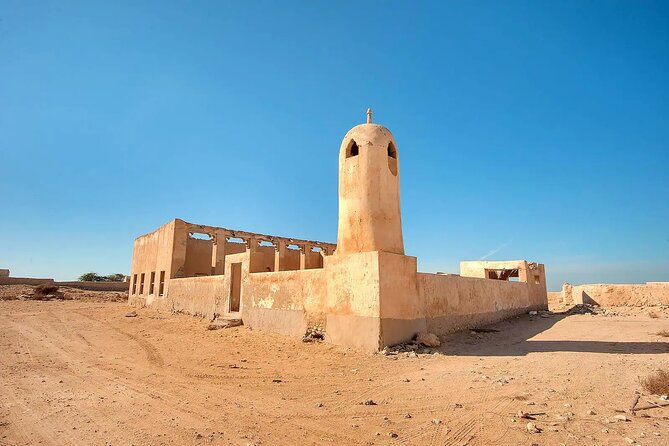
The tour description also includes a traditional Qatari village, with houses made from limestone and mud. The detailed stop list does not assign this village its own separate time, so its exact location and length of visit may depend on the day’s route.
This is the kind of stop that benefits most from a guide. Limestone and mud construction can look simple at first, but the materials, layout, and abandoned condition help explain how people built in a dry climate before modern construction transformed the country.
The route continues toward Al Shamal, where you may see Bahrain on a clear day. That view is not guaranteed, since it depends on visibility, but it gives the northern journey a sense of place. You are close to the edge of Qatar, looking outward across the water rather than back toward Doha.
Some accounts also refer to an abandoned village along the way. The supplied schedule does not name it separately, so ask your guide which village or ruins are included. That small question can help you understand what you are looking at rather than passing through without context.
Desert geometry at 2394+R3
The final listed stop is an unusual site-specific artwork in the desert. Twenty circular shelters, three single rings, and two double rings are arranged across the open ground.
From a distance, the pieces can appear scattered. They are actually placed according to the axes of a fivefold symmetrical pattern, with ten central shelters forming a pentagram. The concept links mathematical form with patterns that may also have influenced sophisticated designs in Islamic cultures during the medieval period.
You have around 40 minutes here, and admission is free. This is a different kind of stop from Al Khor or Al Zubara. There is no old harbor to interpret and no fort interior to explore. The appeal comes from scale, geometry, and the contrast between the precise arrangement and the spare desert around it.
This artwork will suit you if you enjoy unusual cultural sites and strong photographs. If you prefer only traditional history, it may feel less essential. A guide who explains the pattern can make the stop much more meaningful, especially since the design is not immediately obvious from ground level.
The location code provided for the stop is 2394+R3. That suggests the place is identified more by mapping coordinates than by a familiar tourist name. Keep that in mind if you are trying to research it separately or arrange an independent visit.
The guide can shape the entire day
The route is straightforward, but the quality of the commentary matters. You are covering pearling, fishing, mangroves, archaeology, village architecture, regional geography, and contemporary art in a short time.
Tariq has been praised for his history, friendly manner, photo help, and willingness to explain sites before arrival. Usman is described as professional, chatty, respectful, and strong on facts about buildings, villages, forts, and the desert. Wadood has received credit for explaining both culture and history, while Adil has been singled out for taking memorable photographs.
Zia has been noted for arranging pickup and drop-off flexibly and for providing water in hot conditions. These details matter when you are moving between several outdoor stops. At the same time, one account described a guide named Shahid as quiet and less willing to explain the sites, leaving the group to work out some of the history themselves.
That mixed experience is worth noting without making too much of it. Guides can vary. When your guide contacts you before pickup, tell them what interests you most: archaeology, photography, nature, architecture, or local history. In a small group, that may help shape the commentary and stop lengths.
Tea, coffee, and bottled water are included. One guide also took the group for karak tea, described as a particularly enjoyable part of the day. The provided information does not promise a tea stop on every departure, so regard it as a possible extra rather than a fixed feature.
Transport, group size, and practical value
Private transportation is included in an air-conditioned vehicle, with pickup offered. The maximum group size is six, which is a major advantage on a route where you will be entering and leaving the vehicle often.
A small group also gives you a better chance to ask about details along the road. You can point out a building, request a photograph, or clarify what you are seeing without trying to catch a guide’s voice over a full coach.
The word private deserves a little care. The transport is private, but the supplied information does not clearly say that every departure is exclusively for one booking party. Confirm this if complete privacy is important to you.
Most people can participate, according to the activity information. No special accessibility details are provided, so ask the operator directly if you need specific vehicle or site arrangements. The fort, village, mangroves, and artwork may involve walking on different surfaces, but the exact conditions are not specified.
Pickup and drop-off flexibility has been useful for some people, including a last-minute change of drop-off point. Do not assume that every change can be accommodated, especially within 24 hours, but it is worth asking the operator before the tour begins.
Who should book this north Qatar tour?
I would choose this outing if you have already seen the main sights in Doha and want a half-day introduction to the country beyond the capital. It also suits visitors with a short stay who want several northern highlights without renting a car or arranging separate drivers.
Families may like the simple mix of harbor, mangroves, fort, village, and desert artwork. The small vehicle and included drinks help, though the day still involves road time and outdoor stops.
History fans should pay particular attention to Al Zubara. Nature lovers will get the most from Purple Island and the mangroves. Photographers should appreciate the dhows, old walls, desert forms, and opportunities for guide-assisted pictures.
I would hesitate if you want a slow, unstructured day. Four stops, plus the northern village and possible Al Shamal views, make this a compact route. I would also hesitate if your main goal is an extended mangrove activity, a long village walk, or a full archaeological tour. Those experiences are not promised in the schedule.
Free cancellation is available if you cancel at least 24 hours before the start time. Cancellations within 24 hours are not refunded, and changes inside that period are not accepted.
Should you book it?
Book this tour if you want efficient access to northern Qatar, value a small air-conditioned vehicle, and enjoy having history explained as you go. The strongest reasons are Al Zubara’s archaeological importance, the peaceful mangroves, and the chance to connect Qatar’s pearling past with its modern cultural identity.
At $59 per person, it is a fair option for a small party that would otherwise need private transport. Before booking, confirm the fort admission, the exact village stop, whether the departure is fully private, and which guide is assigned.
If you want a relaxed nature day or a specialist archaeological visit, choose something more focused. If you want a well-packed first look at Qatar north of Doha, this tour gives you a useful mix of coast, ruins, village life, and desert art.
FAQ
How long is the North of Qatar tour?
The tour lasts approximately four hours. The actual length can vary, and some departures may run longer depending on the guide, stops, and route.
What places are included?
The listed stops are Al Khor, Purple Island or Al Khor Island, Al Zubara Fort, and the artwork at location 2394+R3. The route description also includes a traditional Qatari village and travel toward Al Shamal.
Is hotel pickup available?
Yes. Pickup is offered as part of the experience.
How many people can join?
The maximum group size is six travelers.
Is transportation included?
Yes. Private transportation in an air-conditioned vehicle is included.
Are drinks provided?
Yes. Bottled water, coffee, and tea are included. Karak tea may also be offered during the outing, but it is not listed as a guaranteed stop.
Is admission to Al Zubara Fort included?
No. The admission fee for Al Zubara Fort is not included. All fees and taxes are also listed as excluded.
Can I cancel for a refund?
You can receive a full refund if you cancel at least 24 hours before the experience start time. Cancellations or changes made within 24 hours are not accepted for a refund.
Just added around Doha
- Doha: Night Desert Safari With Stargazing and Inland Sea★ 5.0 · 9 reviews
- From Doha: Private West Coast and Camel Race Track Tour★ 4.7 · 4 reviews
- Private Dunes Bashing | Desert Safari | Sand Boarding★ 5.0 · 5 reviews
- Private Wakesurfing or Wakeboarding along Doha’s skyline★ 5.0 · 3 reviews
- Doha-Private half day safari Sunrise/Sunset★ 5.0 · 6 reviews
- Doha : West Coast Tour on Zekreet Peninsula★ 5.0 · 15 reviews
- Doha: West Coast Tour Sculpture,Camel Racing Track Rock Formation★ 5.0 · 3 reviews
- Doha; Sunrise Desert Tour and camel safari 4hrs★ 5.0 · 15 reviews
Historical Tours, compared.
Full Day Qatar’s North And West tour || History & Heritage
Read our review →
Culture & History Qatar Tour to the North & West
Read our review →

Doha Combo a Rich Heritage from the Desert to the City
Read our review →
Full day City and North Qatar tour | History and Heritage
Read our review →
Combo Culture & Adventure: North Qatar Heritage & Desert Safari
Read our review →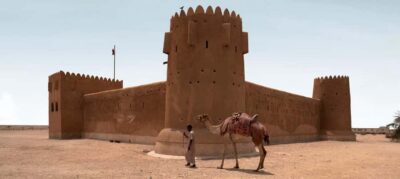
Browse the lists this tour appears in