Reviewed · PRIVATE
FIFA 2022 World Cup Stadiums in Qatar – Private Trip from Doha with Hotel Pickup
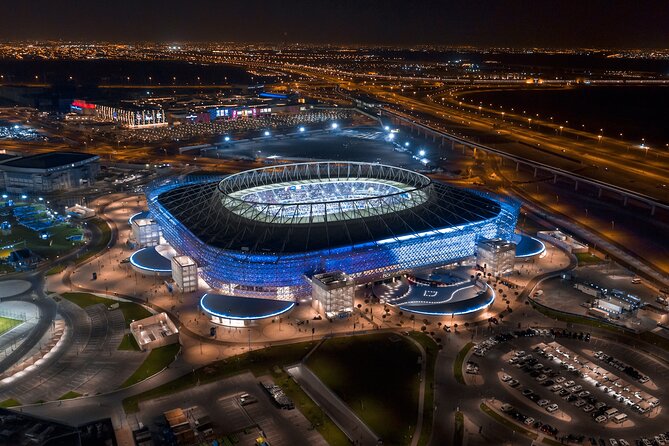
Qatar’s World Cup stadiums are more than football venues. They are a crash course in bold architecture, rapid development, and the practical challenge of hosting a global tournament in a desert country. This private eight-hour tour covers all eight featured stadiums, including temporary Stadium 974 and Lusail Stadium, the 80,000-seat final venue.
I like the private vehicle and flexible itinerary, since you avoid being tied to a large group and can make the long circuit at your own pace. I also like the mix of famous stadiums, photo stops, and desert off-roading at the end. The main limitation is clear: you see the stadiums from outside only, and the $550 per-person price is high unless you are traveling with people who value the private setup.
Key points before you book
- Eight World Cup stadiums in one day: Visit Stadium 974, Lusail, Al Bayt, Ahmad Bin Ali, Education City, Khalifa International, Al Thumama, and Al Janoub.
- Exterior visits only: The tour is built around architecture, photographs, and explanations rather than entry into seating areas or stadium interiors.
- Private hotel pickup: Your group has its own air-conditioned vehicle and English-speaking local guide.
- Stadium 974 is the unusual stop: This temporary venue was designed to be dismantled after the 2022 World Cup, giving the visit a special time-sensitive quality.
- Desert driving adds a second side of Qatar: The day ends with off-roading, not just a string of roadside photo stops.
- Allow a full day: The listed duration is about eight hours, with roughly 30 minutes planned at each stadium.
What this private stadium tour is really like
The day is built as a wide loop from Doha. You spend much of it moving between venues, with about 30 minutes at each stop. That pace is sensible for a stadium circuit, but it also means you should think of this as a visual and architectural tour, not a behind-the-scenes football experience.
Your guide drives a private, air-conditioned vehicle and can adjust the route. Pickup and drop-off at your hotel are included, and multiple starting times are available. Those details matter in Qatar, where a private vehicle is far more comfortable than trying to connect distant stadium sites by public transport.
The guide speaks English and explains the stadium projects, the logistics of building them, and Qatar’s place in Middle Eastern football. The amount of historical detail may depend on the guide. If the construction story matters to you, ask early for more information about materials, design choices, transport planning, and the stadiums’ intended future use.
A few more Doha trips to weigh up
- Private Half Day Desert Safari
★ 5.0 · 1,350 reviews - Desert Safari & Keshta | (Private)
★ 5.0 · 721 reviews - (Private) Quickie to the Desert | Sandboarding | Inland Sea
★ 5.0 · 436 reviews
Stadium 974, a venue designed to disappear
Stadium 974 is the most unusual opening stop. Its name refers to the number of shipping containers used in its construction and also connects to Qatar’s international dialing code. The venue was planned as a temporary facility, with a reported site area of about 450,000 square metres, and was intended to be dismantled after the 2022 World Cup.
That gives this stop a different feel from the others. You are not simply looking at a permanent bowl built for decades of matches. You are seeing a stadium designed around reuse, removal, and the practical problem of what happens to a major venue after a tournament ends.
The supplied tour details describe access at a particular time, arranged through the tour. Since the World Cup period has passed and the stadium was intended for removal, you should confirm its current condition and access before booking. If it remains available, it is likely the most time-sensitive stop on the route.
Plan to use the 30 minutes for photographs and for questions about temporary construction. This is also a good place to ask how the venue differed from Qatar’s permanent stadiums.
Lusail Stadium and the scale of a World Cup final
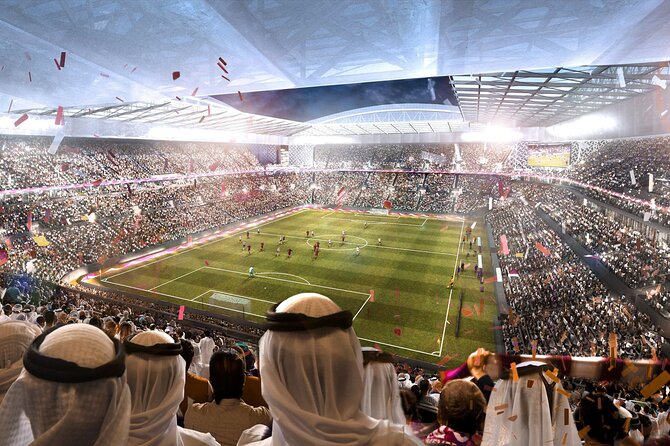
Lusail Stadium is Qatar’s largest stadium, with room for 80,000 people. It was selected to host the 2022 World Cup final, so it carries the most obvious tournament status of the stops.
Even if you are not a football fan, the scale is the point. From outside, you get a sense of the size required for a global final and the large public spaces needed to handle tens of thousands of people. A 30-minute stop will not explain every feature, but it gives you time to see the exterior, take photographs, and hear how the venue fits into Qatar’s wider development.
This is one of the best stops for a first-time visitor who wants a single image that explains the ambition of the tournament. It is also one of the places where exterior access may feel limiting. You will not be walking through the concourses or sitting in the stands, so the experience depends on your guide’s explanation and your interest in architecture.
Al Bayt Stadium, football shaped by nomadic tents
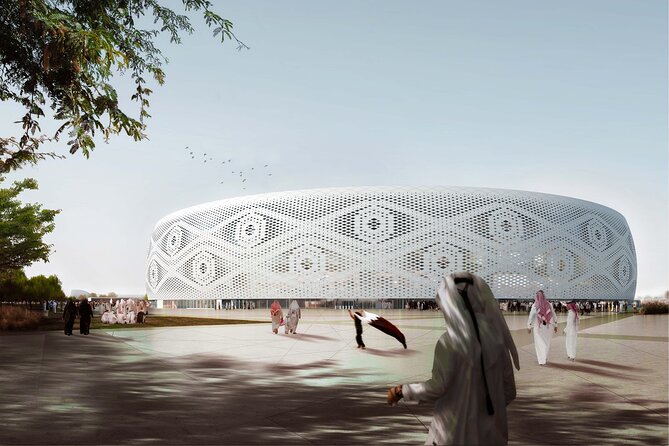
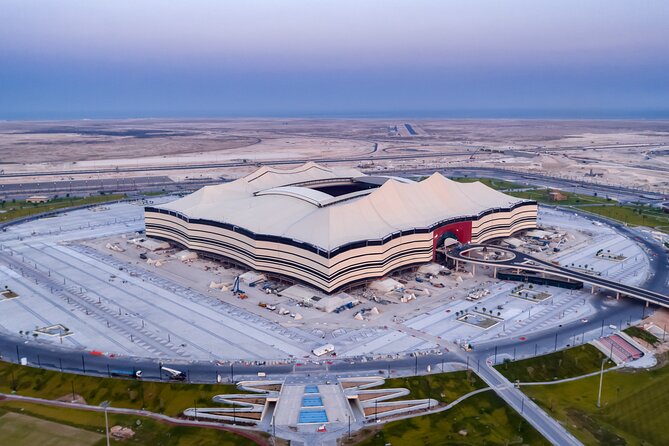
Al Bayt Stadium in Al Khor takes its design from the traditional tent structures used by nomadic peoples in Qatar. The idea is easy to understand from the outside: the stadium was designed to recall a large tent, while still functioning as a modern international sports venue.
This stop gives the tour some cultural context. The stadium is not only a huge piece of modern construction. Its form refers to travel, shelter, and life in the region before today’s cities and highways.
The venue was planned as the opening stadium for the 2022 World Cup. Its location also takes you beyond central Doha, which helps you see how widely Qatar’s tournament infrastructure was spread. The drive contributes to the day, though it also makes the eight-hour duration realistic.
Use your time here to ask what parts of the design are symbolic and what parts serve a practical purpose. A good explanation can turn a quick exterior stop into one of the more memorable moments of the route.
Same desert and coast, a completely different kind of day:
- Doha: Safari, ATV, Camels, Sandboarding and Inland Sea Tour
★ 4.8 · 5,291 reviews - Doha: ATV, Quad/Buggy Dune Bashing, Camel Ride, Sandboarding
★ 5.0 · 3,784 reviews - Desert safari, Dune bashing, sandboarding, camel, ATV Option
★ 5.0 · 2,826 reviews - Qatar Gold Dune Safari, Dune Bashing,Camel Ride,Sand Boarding,Inland Sea Desert
★ 5.0 · 2,807 reviews
Ahmad Bin Ali Stadium in Al Rayyan
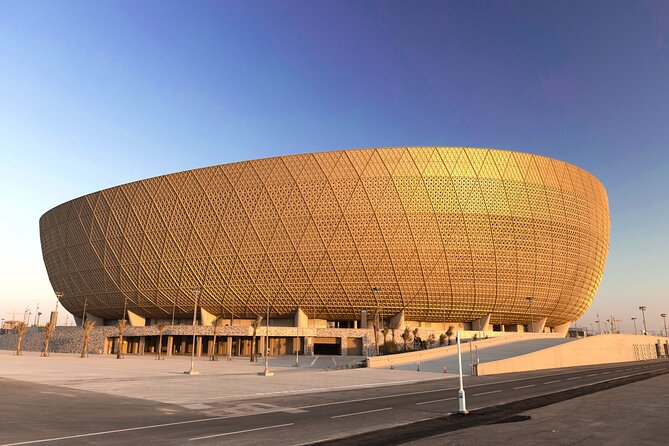
The itinerary calls this Al Rayyan Stadium, also known as Ahmad Bin Ali Stadium. It has capacity for about 50,000 spectators and is connected with Al-Rayyan Football Club.
The original venue opened in 2003 and was later demolished. A new stadium was built in its place after the site was redeveloped. That makes this stop useful for understanding how Qatar used existing sporting locations while preparing for the World Cup, even when renovation was not enough.
The name can cause some confusion, so listen carefully to the guide’s explanation. The venue has been referred to by both Al Rayyan and Ahmad Bin Ali, and the tour information uses both names. If you are recording notes or photographs, label them with both to avoid mixing it up with another stadium.
This is a straightforward photo stop, but it has a good redevelopment story. It shows that the tournament was not simply a matter of putting seven new structures on empty land.
Education City Stadium beside university campuses
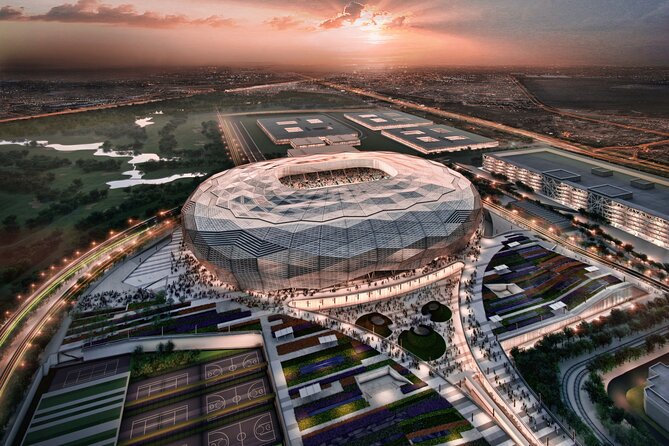
Education City Stadium sits among several university campuses. That location gives the stop a different character from the large standalone sports complexes elsewhere on the route.
Here, you can connect the stadium to Qatar’s education system and see how sports facilities were placed within a wider academic district. The tour description presents the area as a chance to understand both the venue and the university setting around it.
For me, the useful question is what happens to a World Cup stadium after the tournament. A stadium near universities suggests possible regular use by students and local sports programs, rather than leaving it as a monument to one event. The provided information does not specify the stadium’s later operating arrangements, so ask your guide for current details.
The half-hour stop should be enough for exterior photographs and a short explanation. Do not expect a campus tour or entry into university buildings, since neither is included.
Khalifa International Stadium and Qatar’s older sporting roots
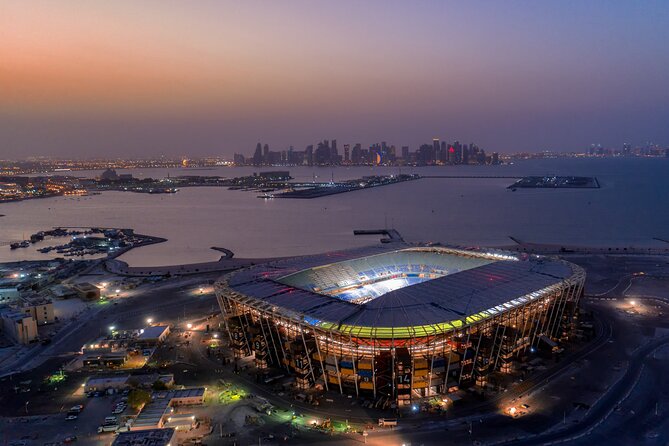
Khalifa International Stadium is also called the National Stadium. It opened in 1976 and holds more than 45,000 people, making it older than the purpose-built World Cup venues on this route.
That age gives it a useful role in the day. Qatar’s football story did not begin with the 2022 tournament, and Khalifa International helps show the country’s earlier sporting infrastructure. The venue has undergone regular renovation and has been updated with newer technology.
The surrounding Aspire complex includes the Hamad Aquatic Centre, Aspire Academy, and Aspire Tower. This is more than a single football ground. It is part of a larger sports and training district.
If you want historical context, spend your questions here. Ask how the stadium changed over time and how an older national venue was prepared for modern international competition. The tour promises information about construction logistics, but the detail level can vary, so direct questions are worthwhile.
Al Thumama and the shape of a traditional gahfiya
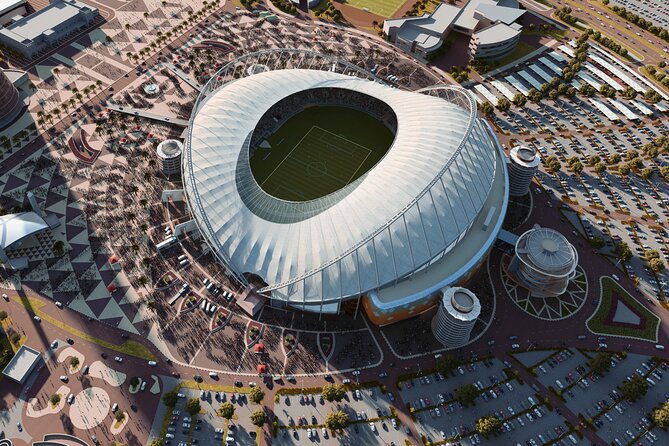
Al Thumama is described as one of Qatar’s most colorful football stadiums. Its design draws on Arab culture and traditions, and the exterior can look almost like a large piece of decorative art.
The stadium’s form is associated with the gahfiya, a traditional woven cap worn by men and boys in the region. Even without entering, the exterior gives you something distinctive to photograph. It is less anonymous than a simple concrete bowl and more clearly tied to local culture.
This is also the venue connected with the supplied account of attending a France versus Tunisia match during the World Cup. That experience is not part of this tour, which offers outside viewing only, but it helps explain why Al Thumama can feel special to football fans. The stadium is not just a photo backdrop. It carries the memory of a major international match setting.
Keep expectations in check. You will not be watching a match on this excursion, and no food or drinks are included. Bring water and plan your meal around the long day.
Al Janoub and the retractable roof
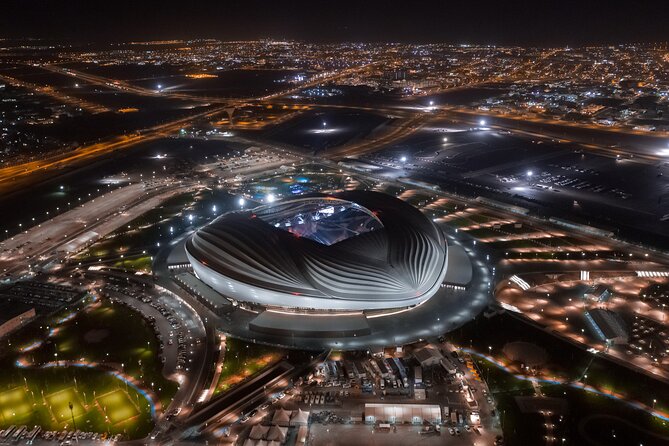
Al Janoub Stadium, also called Al Wakrah Al-Janoub Stadium in the tour details, opened in 2019. Its best-known feature is the retractable roof.
That roof is the main reason to pay attention here. Qatar’s heat creates a demanding environment for outdoor sport, so roof technology is not just a design flourish. It is part of the practical effort to make football possible in hot conditions.
The exterior is associated with the work of architect Zaha Hadid and takes inspiration from the sails and forms of traditional boats used in Al Wakrah. The supplied information confirms the retractable roof but does not promise that it will be operated during your visit. You should expect to see the structure rather than a demonstration.
This is a strong final stadium stop before the desert portion. The tour shifts from high-tech sporting design to open-country driving, which gives the day a welcome change of pace.
Why the desert section matters
The advertised off-roading comes at the end of the tour. Exact driving time and location are not specified, so you should ask the provider how much time is reserved for it and what type of vehicle is used.
Still, the addition changes the value of the day. Without it, you would spend eight hours moving between stadiums and taking exterior photographs. With it, you get a small taste of Qatar beyond its tournament architecture.
Do not book this expecting a full desert safari unless the provider confirms that separately. The tour only promises off-roading, not camel rides, dune camps, meals, or a sunset program. That distinction matters when comparing it with dedicated desert excursions.
Is $550 per person fair?
At $550 per person, this is an expensive day if you are traveling alone or as a couple. The price makes more sense for a group that wants a private vehicle, hotel pickup, a guide, schedule flexibility, and one carefully arranged route covering eight widely separated sites.
The tour includes taxes and fees, transport, guide service, pickup and drop-off, and a customizable itinerary. It does not include food or drinks. Group discounts are offered, so the per-person cost may improve when more people share the private booking.
The main value is convenience. You do not need to plan the route, arrange transfers, or work out how to reach stadiums in different parts of Qatar. You also get a guide who can connect the venues to football, architecture, and construction planning.
The price is harder to justify if you only want to photograph one or two stadiums. It is also less attractive if entering the buildings is essential to you. All stadium visits are from outside only.
Who should book this experience?
I would choose this tour for a serious football fan, an architecture enthusiast, or a short-stay visitor who wants to cover Qatar’s World Cup venues in one day. It also suits a family or private group that values hotel pickup and does not want to manage a long independent route.
The tour is a good fit if you enjoy asking questions and comparing design ideas. It is less suitable if you want match tickets, stadium interiors, museum exhibits, or a slow visit at one venue.
You should have moderate physical fitness. The details do not describe a strenuous walking route, but this is a full day with repeated stops, vehicle time, and desert driving. Wear practical clothing and shoes, carry water, and leave room in your schedule in case traffic or access changes the route.
Booking advice and possible changes
The tour offers free cancellation if you cancel at least 24 hours before the local start time. Changes or cancellations inside that window are not accepted for a refund.
The World Cup period brought special road closures, crowd controls, and changing access rules, and the route could be altered for reasons outside the operator’s control. Even outside tournament time, Stadium 974 requires particular attention because it was designed as a temporary facility.
Before paying, confirm three points: which stadiums can currently be viewed, how much desert off-roading is included, and what level of construction history the guide plans to cover. Those answers will help you decide if the price matches what you want.
Should you book it?
Book this if your goal is to see all eight World Cup stadiums efficiently, with private transport and a local English-speaking guide. The combination of stadium architecture, hotel pickup, flexible timing, and desert driving gives the day more range than a simple city sightseeing route.
Skip it if you need interior access or if $550 per person feels too steep for exterior views. For the right group, the convenience and coverage are the real advantages. For everyone else, a smaller stadium-focused outing may offer better value.
FAQ
How long does the stadium tour last?
The experience lasts approximately eight hours.
How many stadiums are included?
The route includes eight FIFA World Cup 2022 stadiums: Stadium 974, Lusail Stadium, Al Bayt Stadium, Ahmad Bin Ali Stadium, Education City Stadium, Khalifa International Stadium, Al Thumama Stadium, and Al Janoub Stadium.
Can I enter the stadiums?
No. The tour includes views of all the stadiums from outside only.
Is hotel pickup included?
Yes. Hotel pickup and drop-off are included.
Is this a private tour?
Yes. Only your group participates in the activity.
Is transportation provided?
Yes. A private air-conditioned vehicle is included.
Is the itinerary flexible?
Yes. The itinerary is customizable, and multiple starting times are available.
Does the tour include food and drinks?
No. Food and drinks are not included.
Is a guide included?
Yes. A private local English-speaking guide is included.
What happens if the route changes?
The itinerary may be modified because of road closures, traffic, venue closures, or other conditions. The route can be adjusted according to the situation.
What is the cancellation policy?
You can cancel for a full refund up to 24 hours before the experience start time. Cancellations or changes made less than 24 hours before the start time are not accepted for a refund.
Just added around Doha
- Doha: Night Desert Safari With Stargazing and Inland Sea★ 5.0 · 9 reviews
- From Doha: Private West Coast and Camel Race Track Tour★ 4.7 · 4 reviews
- Private Dunes Bashing | Desert Safari | Sand Boarding★ 5.0 · 5 reviews
- Private Wakesurfing or Wakeboarding along Doha’s skyline★ 5.0 · 3 reviews
- Doha-Private half day safari Sunrise/Sunset★ 5.0 · 6 reviews
- Doha : West Coast Tour on Zekreet Peninsula★ 5.0 · 15 reviews
- Doha: West Coast Tour Sculpture,Camel Racing Track Rock Formation★ 5.0 · 3 reviews
- Private Doha City Tour From Airport And Hotel★ 5.0 · 8 reviews
Private, compared.
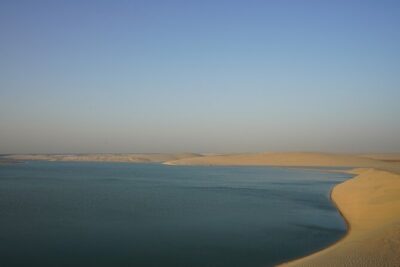
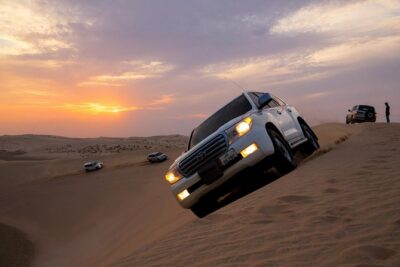

(Private) Quickie to the Desert | Sandboarding | Inland Sea
Read our review →
Doha City Tour And Dhow Boat Cruise (Private/Sharing)
Read our review →
Doha Private Night City Tour – With or Without Local Meal
Read our review →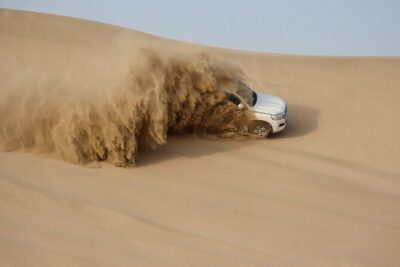
Private Half Day Desert Safari with Camel Ride
Read our review →