Reviewed · DOHA TOURS
Doha: Explore the North and West of Qatar With Transfers
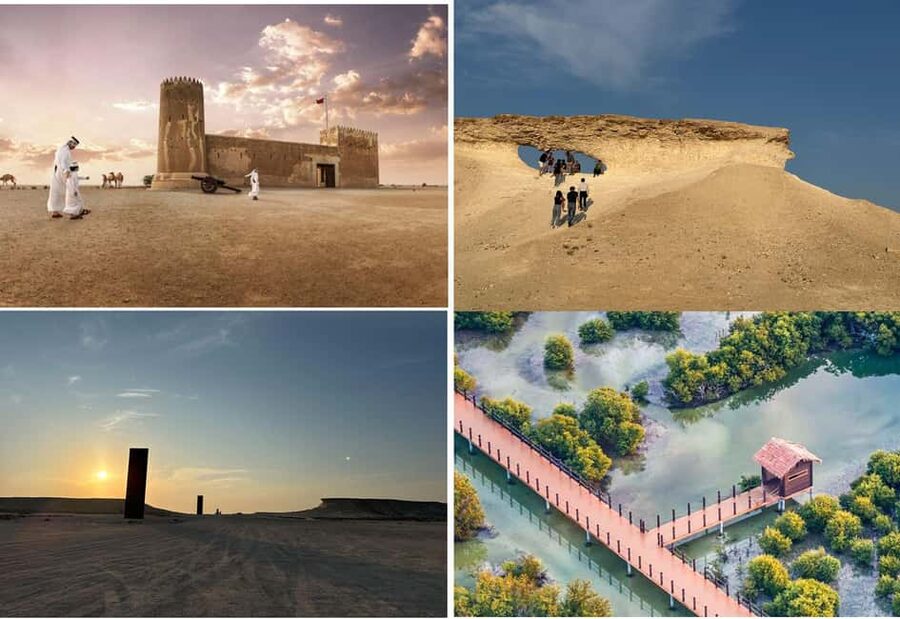
Qatar’s most surprising sights sit far beyond Doha’s glass towers. This seven-hour trip takes you from fishing harbours and mangroves to a UNESCO-listed fort, stark desert rock, giant steel sculpture, and a camel racetrack. Richard Serra’s East-West/West-East is the visual high point, but the camel racing stop may be the most memorable.
I like the mix of old Qatar and modern Qatar, especially the shift from Zubara’s trading past to Serra’s bold artwork in the desert. I also like the small group, capped at 12, and the fact that guides such as Arum, Aram, and Muzzi are praised for explaining the country’s story rather than simply pointing out sights.
The main drawback is the pace. With seven hours covering a large part of the country, most stops are short, and the tour includes a fair amount of driving. If you want long walks, a slow museum visit, or time for a proper meal, this schedule may feel tight.
Key points to know before you book
- Seven hours from Doha: A full-day outing with hotel pickup and drop-off, covering both Qatar’s north and west.
- A strong variety of stops: Expect a harbour, mangroves, fort, village ruins, rock formations, monumental art, and camel racing.
- Small-group transport: You ride in an air-conditioned 4×4 with no more than 12 people.
- The guide matters: Arum and Muzzi are named by several guests as engaging English-speaking guides who add useful context.
- No meal included: Bottled water and Karak tea are provided, but you need to plan around the lack of lunch.
- Good value for a first look: At $108 per person, the price covers transport, guiding, and a wide sweep of Qatar, though not extended time at each place.
Why this north and west route is worth your day
Many visitors see Qatar through Doha: modern architecture, shopping centres, museums, and the Corniche. This tour gives you a very different picture. You spend much of the day outside the capital, where the setting is quieter and the sights are spread across open coastal and desert areas.
I like this route because it does not rely on one big attraction. Instead, it builds a picture of Qatar through contrasts. Al Khor Harbour points to the country’s fishing life. Zubara Fort recalls trade and settlement. Zekreet shows the force of wind and rock. Serra’s artwork brings contemporary culture into that open setting, while the camel racetrack connects the trip to a living tradition.
The $108 price is reasonable for a seven-hour small-group trip with a 4×4, driver-guide, bottled water, Karak tea, and hotel transfers. You would need to arrange several separate rides to cover these places alone, and some locations are not close to Doha. The value is strongest if you want broad coverage in one day and appreciate having someone explain what you are seeing.
The trade-off is simple: this is an overview, not a slow study tour. The itinerary allows around 20 to 60 minutes at each main stop, with many shorter visits. You will see a lot, but you will not have unlimited time for photography, walking, or quiet reflection.
Other Doha days worth booking alongside this:
- Doha: Safari, ATV, Camels, Sandboarding and Inland Sea Tour
★ 4.8 · 5,291 reviews - Doha: ATV, Quad/Buggy Dune Bashing, Camel Ride, Sandboarding
★ 5.0 · 3,784 reviews - Desert safari, Dune bashing, sandboarding, camel, ATV Option
★ 5.0 · 2,826 reviews
Al Khor Harbour and the coast
The first sightseeing stop is Al Khor Harbour, reached after pickup in Doha and a drive of about 40 minutes. You get roughly 20 minutes here for photographs and to look across the water.
The harbour offers a useful introduction to Qatar’s older coastal economy. Before oil and gas transformed the country, fishing and seafaring shaped daily life along this coast. Your guide can help connect the calm harbour you see today with that earlier way of life.
Do not expect a long harbour cruise or a large museum visit. This is a short orientation stop. It works best as a chance to stretch your legs, take in the sea, and begin the day away from the city.
Purple Island’s mangroves and quiet paths
Purple Island is one of the day’s more peaceful stops. You have about 30 minutes for a visit, guided sightseeing, walking, and photographs.
The island is known for mangroves and coastal wildlife. The natural setting provides a welcome change from Doha’s built-up centre and the dry interior. You can follow tranquil paths and look across the low coastal terrain, with your guide pointing out the area’s natural features.
The name can create an expectation of bright colour, but the appeal here is the combination of shallow coastal water, mangrove growth, and open space. Conditions can affect how the area looks, so treat it as a nature stop rather than a guaranteed dramatic spectacle.
Comfortable shoes are sensible because walking is part of the visit. The time is enough to get a feel for the place, but not enough for a long nature walk. If you enjoy birds, plants, and quiet scenery, you will likely value this stop more than someone focused only on major monuments.
Zubara Fort and Qatar’s trading past
After more driving, the route reaches Al Zubara Fort. The visit lasts about an hour, making it the longest stop of the day and one of the most important.
Zubara Fort is a UNESCO World Heritage site and was once connected to a major trading settlement. The fort gives you a physical way to understand Qatar’s past, especially its links to regional commerce and coastal settlement. Its preserved form also shows how a site can be protected while still telling a larger national story.
This is where a good guide adds real value. Arum, also known as Aram in one account, is repeatedly praised for explaining Qatar’s past and for making the story accessible. Muzzi is also described as making the explanations engaging. Names and staffing can change, but the format gives you an English-speaking guide rather than a driver who simply drops you at the entrance.
An hour is a useful amount of time here. You can inspect the fort, take photographs, and hear the basic story without rushing through in ten minutes. Still, do not expect a full archaeological tour or a long museum session. The fort is the setting for the history, and the guide’s explanation is central to understanding it.
Same desert and coast, a completely different kind of day:
- Qatar Gold Dune Safari, Dune Bashing,Camel Ride,Sand Boarding,Inland Sea Desert
★ 5.0 · 2,807 reviews - Doha :Half Day Desert Safari | Camel Riding | ATV | Sand Surfing
★ 5.0 · 1,907 reviews - Doha: Guided City Tour with Airport and Hotel Pickup
★ 5.0 · 1,585 reviews - Doha:ATV,Quad or Buggy Dune Bashing,CamelRide & Sandboarding
★ 5.0 · 1,413 reviews
Zekreet’s rock formations and desert views
The route then moves west toward Zekreet. The schedule allows about 30 minutes for a rock formation stop, including photographs, a guided visit, and sightseeing.
The Zekreet rock formations are made of pale limestone and rise sharply from the surrounding desert. Their unusual shapes create some of the strongest photo opportunities on the trip. You get a sense of Qatar’s rugged interior here, far removed from the polished skyline of Doha.
The attraction is visual and geological rather than heavily interpreted. The formations do not come with a long formal tour, so you should be ready to look, walk a little, and photograph the shapes from different angles. In strong sun, the rock can appear stark and almost sculptural.
This is also one of the places where the 4×4 is useful. The tour is designed to reach a group of widely spaced sights across open country, and the vehicle keeps the day practical. You should not confuse this with an off-road adventure built around fast driving. The emphasis is on reaching the sites and seeing the scenery.
Zekreet Village and the fort ruins
A traditional village stop follows, with about 30 minutes for a visit and photographs. The itinerary also includes Zekreet Fort Ruins, with a shorter 10-minute visit.
The village offers a quieter view of Qatar. Rather than grand architecture, you see a settlement shaped by the dry surroundings, with old structures and traditional forms. It helps you picture rural life and gives the day a human scale after the wide open rock formations.
The fort ruins receive only a brief stop, so keep your expectations in check. You will have time to see the remains and hear a short explanation, but not to explore every detail. This is a good example of the tour’s broad approach: many pieces of Qatar are fitted into one day, with some given more attention than others.
I like the sequence because the village and ruins prevent the westward route from becoming a simple drive between photo points. They add evidence of settlement and daily life. For anyone interested in old buildings, the short visit may feel too brief, but the stop still helps connect the desert with the people who lived and worked there.
Richard Serra’s East-West/West-East
The most striking modern sight is Richard Serra’s East-West/West-East installation. The artwork consists of four enormous steel slabs set across the desert near Zekreet. You get around 30 minutes to visit, walk, and take photographs.
The scale is the point. The slabs cut across the open terrain and create a strong line between the natural setting and human design. You do not need to be an art specialist to appreciate the effect. The empty space around the work is part of the experience, and the contrast makes the sculpture easy to remember.
This stop also explains why the route works better as a whole than as a list of unrelated attractions. After seeing an old fort and village ruins, you encounter a major contemporary artwork in the same broad region. Qatar’s story is not frozen in the past. The country is presenting itself through both preserved heritage and ambitious modern art.
The half-hour visit is generally enough for a walk around the installation and photographs. You will not receive a full art lecture unless your guide chooses to discuss the work at length. Go with an open mind, and pay attention to how the steel changes as you move around it.
Al Shahaniya Camel Racetrack
The final major stop is Al Shahaniya Camel Racetrack, with about 20 minutes for a visit and photographs. This is often the most entertaining part of the day because it connects you with a distinctive Qatari tradition.
Camel racing is not presented here as a museum display. The racetrack gives you a chance to see the setting where this sport takes place, with the desert around it. If racing activity is taking place during your visit, you may get a more animated view of the tradition. The schedule, however, does not promise a full race or a particular event, so you should not book this tour solely on the assumption that you will watch a complete competition.
The short stop is still worthwhile. You see another side of Qatar’s culture, one that feels very different from the forts and sculpture. The camel track also makes a lively ending after a day of ruins and quiet desert scenery.
If this is your favourite stop, you may wish for more time. Twenty minutes is enough for an introduction, not an extended racetrack visit. Your guide can add the cultural context that turns a quick look into something more meaningful.
The vehicle, guide, and pace
Transportation is by air-conditioned 4×4, with hotel pickup and drop-off in Doha. The drive between stops is a substantial part of the experience, including stretches of roughly 30 to 40 minutes. That is unavoidable when covering the north and west in one day, but it makes the air conditioning and bottled water useful rather than decorative extras.
The group is limited to 12 people. That is small enough to make questions easier and keep the vehicle from feeling like a large coach. It also helps the day move along at the planned pace.
The English-speaking guide is both driver and storyteller. Arum is specifically praised for explaining Qatar’s past, answering questions, and making the day informative. Muzzi is also described as a strong guide and careful driver who keeps explanations interesting. You may receive one of these guides or another member of the team, so treat the names as useful possibilities rather than a guarantee.
Karak tea is included, a small but welcome touch. Meals are not included. Since the tour lasts seven hours, plan around that fact and check the day’s arrangements before setting out. The provided information confirms water and tea, but not a lunch stop.
The tour is listed as wheelchair accessible, though the terrain around rock formations, village ruins, and outdoor sites can vary. If you use a wheelchair, confirm the practical details of each stop before booking, particularly where walking is part of the scheduled visit.
Who will get the most from this tour?
You should consider this trip if you want to see beyond Doha but have only one day available. It suits first-time visitors who want a broad introduction to Qatar’s coast, desert, heritage, art, and cultural traditions without arranging several separate excursions.
It is also a good match for people who enjoy learning while they travel. The best part of the day is not just reaching each site. It is hearing how fishing, trade, settlement, art, and camel racing fit into Qatar’s larger story.
Families and small groups may appreciate the range of stops. The route keeps changing, so the day does not depend on one long museum visit. Photographers will also find plenty to work with, from mangroves and fort walls to pale rock and huge steel plates.
You may want a different experience if you dislike driving, need long breaks, or prefer to explore one site in depth. The schedule is active, and some visits last only 10 or 20 minutes. It is best to think of this as a well-packed regional survey, not a leisurely countryside day.
Is the $108 price good value?
At $108 per person, I see fair value in the package. You receive a full seven-hour outing, return transport from Doha, a 4×4, an English-speaking guide-driver, bottled water, and Karak tea. The small group is another advantage over a basic large-coach excursion.
The price makes less sense if you plan to skip most of the stops or want only the camel racetrack or Zubara Fort. You are paying for the range of the route, including the driving between far-flung places. The more you value variety and local explanation, the better the calculation looks.
Free cancellation up to 24 hours before the start and the option to reserve now and pay later add flexibility. Those terms are useful when your Qatar plans are still moving, though they do not change the basic question: can you enjoy a full day with several short stops?
Should you book it?
Book this tour if you want Qatar to feel larger than Doha. The strongest reasons are the mix of places, the small-group 4×4, and the chance to hear the country explained by guides such as Arum or Muzzi. Zubara Fort, Serra’s steel installation, and the camel racetrack give the day three very different high points.
Skip it if you want a slow, specialised visit with plenty of time at each site. The route covers a lot of ground, and the short stops require a flexible attitude. For a first look at Qatar’s north and west, though, $108 buys a practical and varied day with real contrasts, not just another city excursion.
FAQ
Where does the tour begin and end?
The tour includes pickup in Doha and returns you to Doha at the end of the experience.
How long does the experience last?
The tour lasts seven hours.
What places are included?
The route includes Al Khor Harbour, Purple Island, Al Zubara Fort, Zekreet’s rock formations, Zekreet Village, Zekreet Fort Ruins, Richard Serra’s East-West/West-East installation, and Al Shahaniya Camel Racetrack.
Is Zubara Fort included?
Yes. You have about one hour to visit Al Zubara Fort with guided sightseeing and photographs.
Will I visit Richard Serra’s desert artwork?
Yes. The tour visits East-West/West-East near Zekreet and allows about 30 minutes for walking, sightseeing, and photographs.
Is camel racing included?
The tour includes a visit to Al Shahaniya Camel Racetrack. The provided details do not guarantee that a full race will take place during your visit.
What type of vehicle is used?
Transportation is provided in an air-conditioned 4×4 vehicle.
How large is the group?
The experience is a small-group tour limited to 12 participants.
Is food included?
Meals are not included. Bottled drinking water and traditional Karak tea are included.
Is the tour wheelchair accessible?
Yes, the experience is listed as wheelchair accessible. Some outdoor stops include walking, so confirm the practical details for your needs before booking.
Just added around Doha
- Doha: Night Desert Safari With Stargazing and Inland Sea★ 5.0 · 9 reviews
- From Doha: Private West Coast and Camel Race Track Tour★ 4.7 · 4 reviews
- Private Dunes Bashing | Desert Safari | Sand Boarding★ 5.0 · 5 reviews
- Private Wakesurfing or Wakeboarding along Doha’s skyline★ 5.0 · 3 reviews
- Doha-Private half day safari Sunrise/Sunset★ 5.0 · 6 reviews
- Doha : West Coast Tour on Zekreet Peninsula★ 5.0 · 15 reviews
- Doha: West Coast Tour Sculpture,Camel Racing Track Rock Formation★ 5.0 · 3 reviews
- West Coast and Camel Race Track Visit★ 5.0 · 7 reviews
Doha Tours, compared.
Safari, ATV, Camels, Sandboarding and Inland Sea Tour
Read our review →
ATV, Quad/Buggy Dune Bashing, Camel Ride, Sandboarding
Read our review →
Desert safari, Dune bashing, sandboarding, camel, ATV Option
Read our review →
Qatar Gold Dune Safari, Dune Bashing,Camel Ride,Sand Boarding,Inland Sea Desert
Read our review →
Half Day Desert Safari | Camel Riding | ATV | Sand Surfing
Read our review →
Guided City Tour with Airport and Hotel Pickup
Read our review →
ATV,Quad or Buggy Dune Bashing,CamelRide & Sandboarding
Read our review →