
Reviewed · MUSEUMS
Doha, Qatar: Came Racing Track, Oryx & Sheikh Faisal Museum Tour.
Camel racing and a private museum make an unusually good pair. At Al Shahaniya Racetrack, you may see camels training, being cared for, or racing under the control of remote robotic jockeys. Then Sheikh Faisal Museum shifts the focus from living tradition to an enormous private collection of cars, art, weapons, manuscripts, and objects reaching from the Jurassic age to modern Qatar.
I like the private format, since your group can set a flexible pace and arrange pickup and drop-off. I also like the human touch: guides Dharma and Amar are praised for prompt communication, strong English, and friendly service. The main consideration is time. Four hours goes quickly, and the museum alone deserves two hours, so some stops may be brief or viewed from the vehicle.
Key points to know before booking
- Camel training at Al Shahaniya: You may see the animals preparing for races, with a chance of catching a live event.
- Robotic jockeys: Qatar’s traditional sport now uses remote-controlled jockey systems rather than people riding the camels.
- 15,000-plus objects: Sheikh Faisal Museum brings together Qatari heritage, Islamic art, cars, paintings, manuscripts, weapons, and unusual older artifacts.
- Arabian oryx visit: A short stop gives you a chance to see Qatar’s distinctive white antelope with long, straight horns.
- Flexible private touring: Your group travels alone, with pickup offered and timing that can be adjusted within the four-hour outing.
- World Cup architecture: The route includes Education City Stadium and Ahmad Bin Ali Stadium in Al Rayyan.
Why this Doha tour feels different
Many Doha excursions stay within the city, circling modern museums, shopping areas, and dramatic new buildings. This trip takes you beyond the usual urban circuit and connects two less expected parts of Qatar: camel racing and one man’s vast collection of objects from across the country and the wider world.
That contrast is the appeal. At the track, you see a working tradition. At the museum, you see how a Qatari collector has preserved objects linked to daily life, religion, transport, art, and regional history. The day is not built around one grand monument. Instead, it gives you several glimpses of Qatar that are hard to combine on your own.
The tour lasts about four hours and includes pickup. Since it is private, only your group participates. That matters here because the camel track can be quiet at one moment and active at another, while the museum can easily absorb more or less time depending on your interests.
The experience is priced at $120 per person. I consider that a reasonable price for a private half-day outing if you value door-to-door transport and a guide. It is less compelling if you only want a quick photo at the track or prefer to visit museums independently. Group discounts may improve the value for a larger party.
The current rating is listed as 5 from three published ratings. The strongest praise focuses on the guides, especially Dharma and Amar. Dharma is described as arriving early, keeping in touch through WhatsApp, speaking impeccable English, and allowing flexible museum and pickup timing. Amar receives similar praise for taking the group close to the camel training and race facilities.
A few more Doha trips to weigh up
- Half-Day Wonders of Doha: Culture, Skylines, Museums & Souqs
★ 5.0 · 97 reviews - Doha Night City Tour | Souq Waqif | National Museum | The Pearl | Katara Village
★ 5.0 · 50 reviews - Doha: Iconic Sights, Culture & Museum of Islamic Art Tour
★ 5.0 · 43 reviews
Al Shahaniya Racetrack: Qatar’s living camel tradition
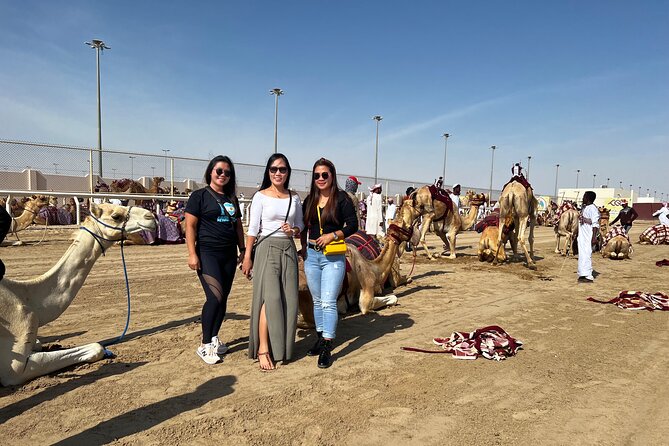
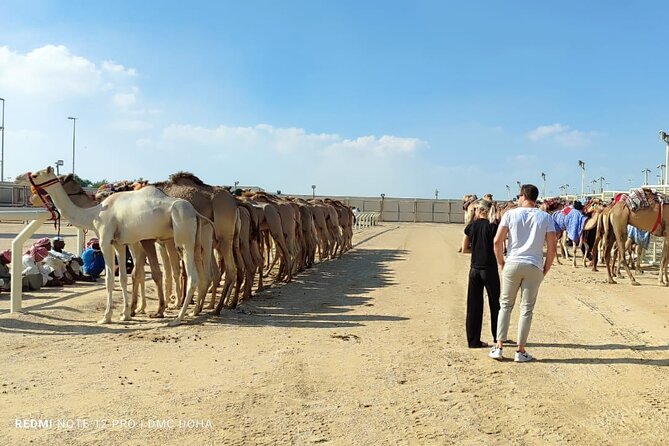
The first major stop is Al Shahaniya Camel Racing Track, about an hour of the outing. Camel racing is a popular sport in Qatar and elsewhere in the Gulf, but seeing the setting in person gives the tradition more meaning than simply hearing about it.
You may see camels being trained, handled, and cared for. If the timing is right, you may also watch an actual race. That last point is important: a race is possible, not guaranteed. The track is an active sporting venue, so the schedule will shape what you see.
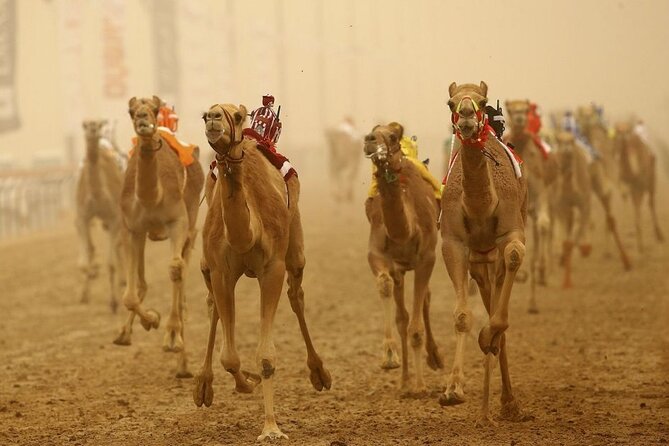
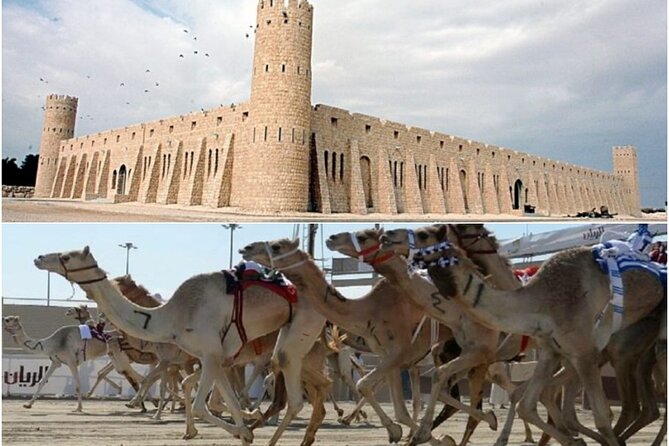
The track itself is designed for speed, with long, straight racing areas. Modern technology now guides the camels. Remote-controlled robotic jockeys are used instead of human riders, allowing an old sport to continue in a safer and more modern form.
I find that combination especially interesting. The camels, the training, and the racing customs belong to a long-standing Gulf tradition, while the robotic jockeys show how Qatar has adapted it for the present day. You are not simply looking at an attraction built for tourists. You are seeing a sport connected to local life and national identity.
Keep your expectations practical. The stop is listed as one hour, and the tour does not promise a race at every departure. You could see training rather than competition. That can still be worthwhile, since the animals and their care are a key part of the experience.
This stop also benefits from having a guide. Without context, a racetrack can look like a long strip of sand and fencing. A guide can help you understand what is happening, point out training activity, and help you make the most of a short visit.
If camel racing is your main reason for booking, ask about the day’s conditions and the likelihood of active racing before you go. The experience description only promises a chance to see a race, not a scheduled event for every group.
Sheikh Faisal Museum: two hours of collecting on a grand scale
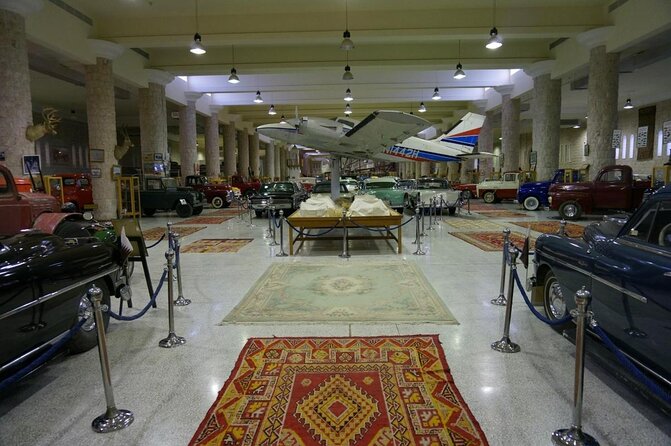
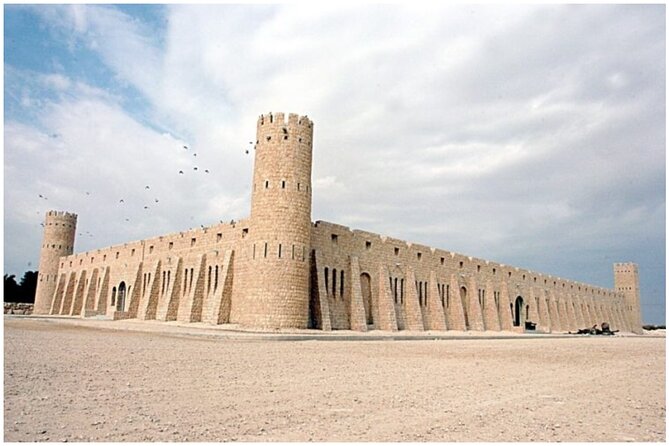
The Sheikh Faisal Bin Qassim Al Thani Museum is the centerpiece of the outing. Allow about two hours here. It is one of the largest private museums in the world and contains more than 15,000 historical pieces.
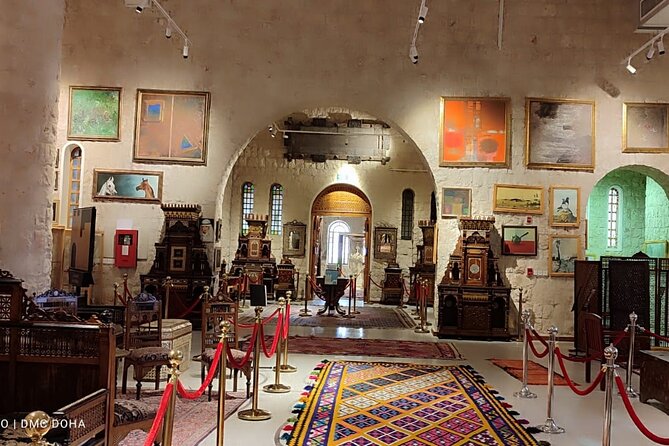
The collection is broad rather than narrowly focused. You can expect traditional Qatari objects alongside Islamic art, international paintings, rare manuscripts, weaponry, and antique cars. The museum also includes artifacts said to reach from the Jurassic age to the present.
That range is both the strength and the challenge. If you like a carefully ordered museum with one clear subject, the sheer number of objects may feel scattered. If you enjoy finding unexpected connections, you will have plenty to look at.
The vintage car collection earns special attention. The accounts of this outing single out the classic and antique vehicles as fascinating, and I can see why. Cars provide an easy entry point for people who are less interested in formal art or manuscripts. They also make the museum appealing to families and mixed-interest groups.
Traditional Qatari and Arabian heritage items give the collection a local anchor. These objects help explain how people lived, traveled, worked, worshiped, and decorated their homes. The international pieces widen the view, showing that this is not only a museum about Qatar.
The museum’s private origins also shape the visit. Sheikh Faisal created the collection to preserve and promote Qatar’s cultural heritage. You are seeing a personal act of collecting on a very large scale, not a standard state museum with a small number of tightly selected galleries.
Plan to move at an easy pace. Two hours is enough for a substantial visit, but probably not enough to inspect every object closely. If cars are your priority, make time for that section. If you care most about Qatari artifacts, ask your guide to help you focus rather than trying to see everything.
A private tour is useful here because the museum can be approached in different ways. Dharma is specifically praised for allowing flexible museum timing, so your group may be able to linger over favorite displays rather than follow a fixed schedule.
The Arabian oryx: a short but meaningful stop
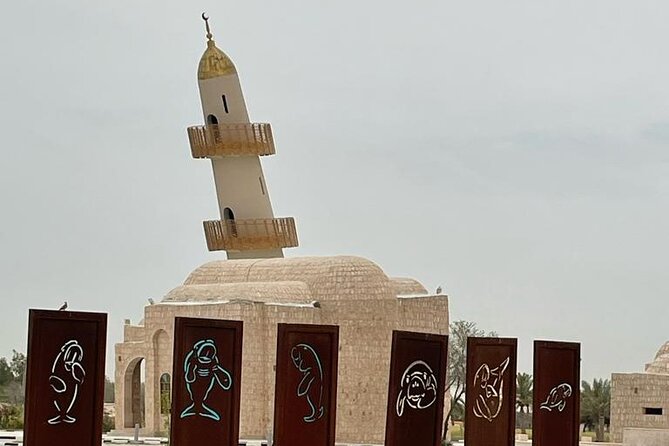
The tour includes a 15-minute stop to see the Arabian oryx. This is a brief part of the day, but it adds a living symbol of the region to an itinerary otherwise centered on buildings, objects, and sport.
The Arabian oryx is an endangered antelope native to the Arabian Peninsula. It is easy to recognize by its white coat and long, straight horns. Its presence gives you another link to Qatar’s natural heritage, even though the visit is short.
Do not expect this to function like a full wildlife outing. The scheduled time is only 15 minutes. Treat it as a quick encounter and a chance to see an animal closely associated with the Arabian Peninsula.
The oryx stop also reinforces the trip’s wider theme. You see camels as working animals, then encounter the oryx as a symbol of regional wildlife, and finally spend time with objects that record human life and culture. Each part is short except for the museum, but together they create a broader picture of Qatar than a city-only sightseeing tour.
Same desert and coast, a completely different kind of day:
- Doha: Safari, ATV, Camels, Sandboarding and Inland Sea Tour
★ 4.8 · 5,291 reviews - Doha: ATV, Quad/Buggy Dune Bashing, Camel Ride, Sandboarding
★ 5.0 · 3,784 reviews - Desert safari, Dune bashing, sandboarding, camel, ATV Option
★ 5.0 · 2,826 reviews - Qatar Gold Dune Safari, Dune Bashing,Camel Ride,Sand Boarding,Inland Sea Desert
★ 5.0 · 2,807 reviews
World Cup stadiums in Al Rayyan
The route includes Education City Stadium and Ahmad Bin Ali Stadium, both in Al Rayyan. These venues hosted matches during the 2022 FIFA World Cup and offer a modern counterpoint to the camel track and heritage museum.
Education City Stadium has seating for about 40,000 and uses energy-saving cooling technology. Its name comes from the surrounding Education City complex, a major center for education and research. The stadium’s design reflects Qatar’s effort to combine large-scale sport with newer environmental systems.
Ahmad Bin Ali Stadium is named for Sheikh Ahmad bin Ali Al Thani, the grandson of Qatar’s founder, Sheikh Jassim bin Mohammed Al Thani. Its exterior uses patterns inspired by Qatari culture and architecture.
The supplied route does not specify a separate visit length for either stadium. You should therefore treat them as brief stops or sightseeing along the route unless your guide confirms otherwise. If you are hoping to tour the interiors, ask before departure. The main scheduled time is devoted to the camel track and museum.
Still, these stadiums add useful context. Qatar’s identity is not only expressed through older traditions and collected artifacts. It is also visible in new public buildings, international sport, and high-tech design. The contrast between robotic jockeys and World Cup architecture is one of the more interesting threads in the day.
The Equestrian Club detail to clarify
The experience overview also describes a return visit to the Equestrian Club, identified as Qatar’s royal stable, where royal and international horses are trained. The more detailed route lists Education City Stadium, Ahmad Bin Ali Stadium, the camel racetrack, the museum, and the Arabian oryx stop, but it does not give the Equestrian Club a separate stop duration.
That difference is worth clearing up before you book. You may be taken there as part of the return journey, but the provided details do not confirm how long the stop lasts or whether it is included on every departure. Ask the operator to confirm the day’s exact route if horses are a major reason you are interested.
This is a good example of why a private tour can help. The provider can explain what is possible on your date and how much time is available. You should not assume every listed sight receives a long visit during a four-hour trip.
Guides, communication, and the private format
The guide can make or break an outing that covers several spread-out locations. Here, Dharma and Amar are the named guides associated with the experience. Dharma is praised for arriving early, using WhatsApp to communicate, and speaking very good English. Amar is praised for making the camel track visit especially engaging and for showing the training and racing areas.
Those details matter more than a generic promise of a friendly guide. Early arrival helps when you are working with a short schedule. WhatsApp contact can make pickup easier, especially if you are staying at a hotel or moving through Doha on a stopover.
The tour is private, so you do not share the vehicle or schedule with another group. That gives you room to ask questions, spend longer at a favorite museum section, or move on when you have seen enough. It does not mean every stop can be extended without limit. The total outing remains about four hours.
Pickup is offered, and the tour allows mobile tickets. Confirmation is provided at booking. Service animals are allowed, and the experience is near public transportation, though the main format is private transport. A moderate level of physical fitness is advised.
I would choose this setup for a couple, family, or small group with different interests. One person can focus on cars, another on Qatari artifacts, and another on sport or animals. A large group may also benefit from any available group discount.
Timing, comfort, and practical trade-offs
The biggest practical issue is the number of subjects packed into four hours. The camel track receives about one hour, the museum about two hours, and the oryx about 15 minutes. Stadium viewing and any equestrian stop must fit around those core visits.
That schedule works best when you want a varied introduction rather than a slow, detailed study. You will get a useful taste of several places, but you may not have time to examine every museum display or wait long for a race.
The price includes admission to Sheikh Faisal Museum and the oryx stop. The camel track admission is listed as free. Pickup, private participation, and the guide are important parts of the value, since reaching these sites independently may require more planning.
You should also remember that the $120 price is per person. For one person, it may feel expensive compared with a simple museum visit. For a private group that wants transport, local guidance, and a flexible schedule, it becomes easier to justify. Group discounts may help.
Free cancellation is available if you cancel at least 24 hours before the start time. Changes or cancellations made inside that window are not accepted for a refund. The cut-off uses local Qatar time, so check the exact start time before making changes.
Who should book this experience?
I would recommend it most strongly to you if this is your first visit to Qatar and you want more than the modern Doha skyline. It gives you a look at sport, wildlife, private collecting, Qatari heritage, and World Cup architecture in one half-day.
It is also a good choice for a stopover. Pickup and drop-off reduce the work of reaching Al Shahaniya and the museum, while the private format makes the schedule easier to manage than a large group excursion.
Families may appreciate the mix of animals, cars, stadiums, and large displays. Car enthusiasts have a clear reason to come, thanks to the antique vehicle collection. Anyone interested in Gulf traditions will find the camel track more revealing than a staged cultural show.
I would hesitate if your only goal is to watch a full camel race. The race is dependent on timing, and no guarantee is given. I would also hesitate if you dislike broad collections or prefer one carefully planned museum with extensive written interpretation.
Should you book the camel track and museum tour?
Book it if you want a private, flexible introduction to parts of Qatar that are easy to miss from central Doha. The strongest reasons are the chance to see camel training, the remarkable scale of Sheikh Faisal Museum, the vintage cars, and the personal service associated with guides such as Dharma and Amar.
Before paying, confirm the exact route for your date. Ask how the stadiums and Equestrian Club fit into the four-hour schedule, and ask whether a camel race is likely. If you understand that the day offers possibilities rather than guarantees, the tour gives you a valuable mix of old traditions, modern Qatar, and unusual collections.
FAQ
How long does the tour last?
The experience lasts approximately four hours.
How much does the tour cost?
The listed price is $120 per person. Group discounts are available.
Is pickup included?
Pickup is offered as part of the experience.
Is the tour private?
Yes. Only your group participates in the activity.
What can I see at Al Shahaniya Camel Racing Track?
You may see camels being trained and cared for. If the timing is right, you may also watch a camel race.
Are robotic jockeys used at the camel track?
Yes. Remote-controlled robotic jockeys are used to guide the camels during races.
How long is the museum visit?
The Sheikh Faisal Bin Qassim Al Thani Museum visit is scheduled for about two hours.
What is displayed at Sheikh Faisal Museum?
The museum has more than 15,000 pieces, including traditional Qatari artifacts, Islamic art, paintings, rare manuscripts, weapons, antique cars, and objects from the Jurassic age to the present.
Can I cancel for a full refund?
Yes, if you cancel at least 24 hours before the experience’s start time. Cancellations or changes made less than 24 hours beforehand are not accepted for a refund.
Just added around Doha
- Doha: Night Desert Safari With Stargazing and Inland Sea★ 5.0 · 9 reviews
- From Doha: Private West Coast and Camel Race Track Tour★ 4.7 · 4 reviews
- Private Dunes Bashing | Desert Safari | Sand Boarding★ 5.0 · 5 reviews
- Private Wakesurfing or Wakeboarding along Doha’s skyline★ 5.0 · 3 reviews
- Doha-Private half day safari Sunrise/Sunset★ 5.0 · 6 reviews
- Doha : West Coast Tour on Zekreet Peninsula★ 5.0 · 15 reviews
- Doha: West Coast Tour Sculpture,Camel Racing Track Rock Formation★ 5.0 · 3 reviews
- Private Doha City Tour From Airport And Hotel★ 5.0 · 8 reviews
Museums, compared.
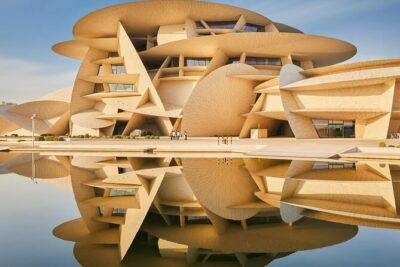
Half-Day Wonders of Doha: Culture, Skylines, Museums & Souqs
Read our review →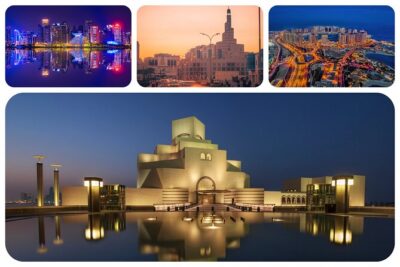
Doha Night City Tour | Souq Waqif | National Museum | The Pearl | Katara Village
Read our review →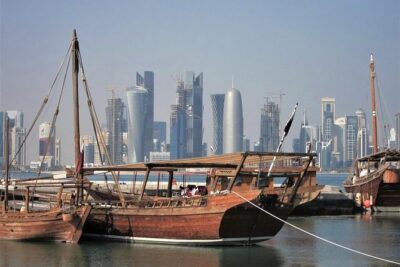
Iconic Sights, Culture & Museum of Islamic Art Tour
Read our review →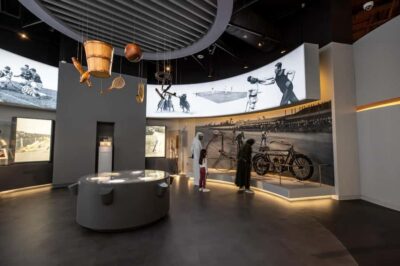
3-2-1 Qatar Olympic and Sports Museum: Admission Ticket
Read our review →
4-Hour Private Museum of Islamic Art in Qatar Tour
Read our review →
Cultural & Thrills: Sheikh Faisal Museum & Camel Race Adventure
Read our review →
Private Doha City Tour, Souq Waqif, Katara, National Museum
Read our review →
Browse the lists this tour appears in